Are We Still Married?

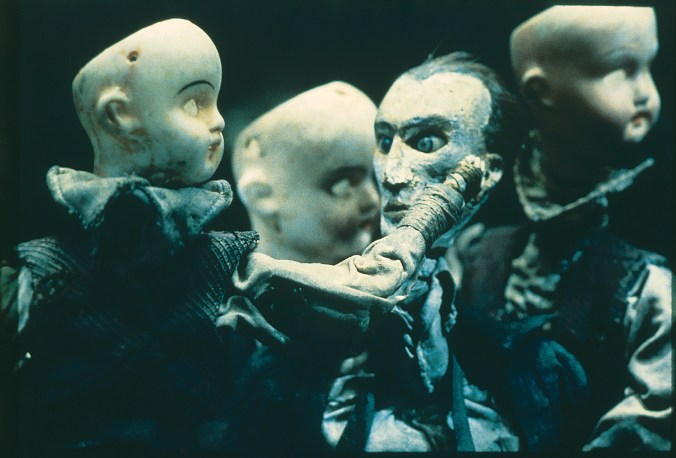
Created by the singularly iconic Brothers Quay, this breathtaking video for one of His Name Is Alive‘s earliest singles rockets the term subjective understanding to new heights.  What is it about?  Do the visuals reflect the lyrics?  How about that ball of light?

The Brothers Quay are a set of identical twins whith a body of work exemplefied by short form masterwork Street of Crocodiles, which has been hailed by filmmaker Terry Gilliam as one of the ten best animated films of all time – the most intriguing bit of praise this writer could imagine, being a deep seated fan (and occasional entrenched defender) of Gilliam’s art.  Instead of regurgitating what can be found on wikipedia and elsewhere, I’ll simply extend my affection for this form and admit that I’m both held in rapture yet slightly repelled by the brothers’ creations.  Creepy and spiritual, dark and warm, with empathetic arms wrapped around all that is neglected and forgotten in the world and our hearts, this is the stuff we only wish Tim Burton were still aiming for.

[the Brothers Quay Collection, a dvd from Kino Video, is out of print. fortunately the Phantom Museums collection is easily obtained through amazon]

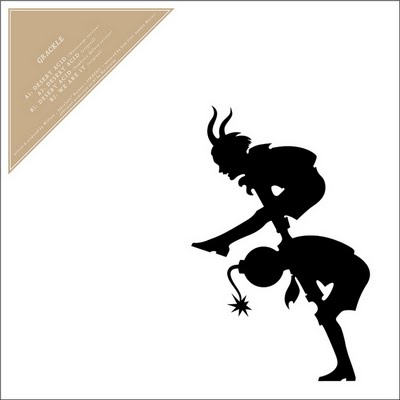
Grackle – Desert Acid

Grackle was a complete mystery to me only a few weeks ago.  Named after a small black bird I see often around the neighborhood, the name dared me to indulge, inflaming my curiosity.  This turned out to be a far-more-than-worthy gamble, as William Burnett (aka Grackle) brings a shitload of personality, energy, and hardened swagger to a corner of the electronic music world often lacking in all of the above.

Ostensibly a moody space disco number, the title track evokes everything from laser-pocked 80’s sci-fi soundtracks to smokey funk bangers, its rhythm deftly negotiating an absolute stampede of bass, yet never once feels any older than Right Now.  It’s the score to nighttime escapades in the Grand Canyon on a clear night, possibly in some future dystopia where the desolate  home of the Roadrunner is the only solace from the onslaught of modern living.  The set-opening Musiccargo remix feels like a primal dance around and through a brush fire, a stomping, clattering frenzy let loose when the crisp air first hits and the wild starts to take over.  A 4/4 motorik pulse glides the momentum on rails straight into the main feature before you’re even aware of what’s happening.  Afterward, the sparkling skyward view beckons and we’re flat on our backs, feeling the draw of space and the sounds of satellites.  The Sombrero Galaxy version draws out the meditative (and frankly psychedelic) aspects of the track, riding through hot aquatic swells bathed in that surface-of-Venus skyline in Blade Runner.  Twinkling synth stabs illuminate romantically pleading horn waves, sending shivers up the spine while the martial lockstep percussion wanders off towards a hazy oasis.  We’re gently brought back to earth the the tune of splashing water and distant laughter.  Finally rounding up this drum-tight selection is an original titled We Are It, feeling like a mysteriously shrouded cousin of some of Gothenburg’s finest club crushers.  All buzzing seaside guitars and breathy vocals, snaking their way through wavering key lines and plinking drum taps, it’s 4am, long after the beach party died down.  So Grackle leaves us by the salvation of water, after all.  Starting out in the middle of the night in the middle of the desert (with possibly a satchel of peyote buttons) has been redefined into something not only desirable, but vital.  If you grew up in the same era as I did (reading this, you probably did) – expect to have all your deep pleasure centers massaged over these 23 minutes.  Take this trip and call me in the morning.

[grab this EP at boomkat, junodownload, or on 12″ from kompakt]

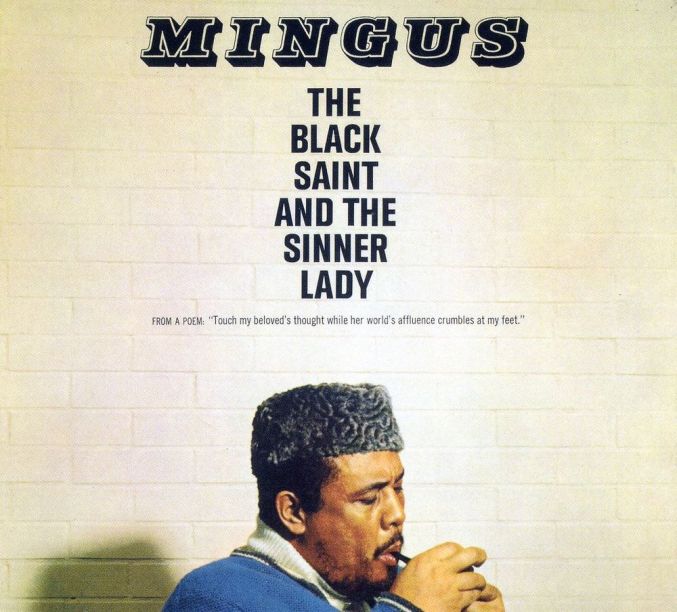
Charles Mingus – The Black Saint and the Sinner Lady

mingus-blacksaint

Charles Mingus is an absolute deity of 20th century jazz…

Continue reading

As The World Turns

I write.  Haters hate.  Fappers fap.  The world turns.

ducks_cranes

*sigh*

Neil Young – Dead Man Soundtrack

Dead Man (14)

Do you know how to use this weapon?” – Nobody

Neil Young’s score for the 1995 Jim Jarmusch film Dead Man is hauntingly evocative, an improvised set made with electric and acoustic guitar, organ, and piano, recorded as Young watched rough cuts of the film over just three days.

Continue reading

Between My Head and the Sky

yoko-between

Yoko Ono. Divisive to many, divine to few. And a patron saint of confident weirdness to certain odd souls, myself included.

Continue reading

Steve Reich’s Early Works

Early Works is a collection of various mould-breaking recordings Steve Reich produced before truly igniting his star with the trademark instrumental minimalism he continues to perfect today.  They are as essential to current minimalism as blues itself was to the invention of rock ‘n’ roll.

earlyworks

Groundbreaking in every sense of the word.  Half of the record consists of musique concrete-style tape loop experiments: Come Out and It’s Gonna Rain – respectively based on vocal samples about police brutality and apocalyptic evangalicalism.  On Come Out, words are presented at first unvarnished, sounding straight from a tape recorder.  “I had to, like open the bruise up, and let some of the bruise blood come out to show them-” states a youthful voice, halting and immediate.  A few repetitions in it begins to split, speeding up in one channel and slowing to an uneasy cadence in the other.  Eventually the dissonance created between the two is combined into a single raucious, nearly beat-driven refrain of “come out / to show them” as two sides of an aural samurai sword swinging to obliterate the mind’s preconceptions of the human voice.  Deconstructing so fully through looping, splicing, and speed, the listener forced to confront the individual phenotypes of speech itself, the malleable nature of words and voice.  A backing beat appear to solidify, but it’s only a byproduct of this snippet of dialogue sifting its way toward a nearly sublime (though always unnerving) rhythm.  The second, It’s Gonna Rain, starts off with prophetic booming preacher assertions, including the titular phrase, which devolves through the same techniques into a cacophany of beats and noise, before developing in the song’s second half into an absolute maelstrom of unrecognizable shouting in tongues.  Except the tongue-speak is fed through a kaleidoscopic blender where only the faintest remnants of whole syllables are detectable.  It’s a disorienting, slightly terrifying, ultimately satisfying journey into the unknown.

The other half of the record hews much closer to the later phase driven work Reich is most known for.  Piano Phase, written just one year after the tape works, showed his genius for the sublime instrumental passages in full bloom and ready for the major leagues.  It’s a piece still played by ensembles when performing selections from his vast body of work, and for good reason.  The same ecstasy-wracked trance effects evident in this 20 minute blissout echo today throughout everything subsequently written by the man.  Simply put, there would be no Music for 18 Musicians, Drumming, Octet, Different Trains/Electric Counterpoint or City Life without this definitive, seed planting piece.  The juggernaut is followed by a short song aptly titled Clapping Music.  If you’ve followed along at all by this point, what’s in store should be obvious.  It’s fantastic.

[for years these recordings were a rarity spread across dozens of disparate and out-of-print vinyl releases, but can be handily obtained via boomkat, cduniverse, or the dependable portal of amazon]