
It’s been an amazing week for Aphex Twin fans and everyone else with open ears. Still digesting Syro, I feel compelled to share this clip. It features a piano on a swing.
It’s been an amazing week for Aphex Twin fans and everyone else with open ears. Still digesting Syro, I feel compelled to share this clip. It features a piano on a swing.
If there’s one piece of advice I can offer those on the perpetual quest to peel back the edges of their musical horizons, it is to subscibe to the mailing lists of shops and labels you trust. I can’t finish a list of the albums and artists I’ve grown to love because someone at aQuarius, Other Music, Forced Exposure, Vertigo or Amoeba simply loved a new or obscure piece and carved out a space for enthusiasm in the weekly newsletter. It’s why I share what I do on this blog. Last week, my email from Boomkat announced what has quickly become my favorite surprise in months: a new 12″ from Bee Mask (Chris Madak), a half hour of bliss spread over two songs titled Vaporware and Scanops.
 The simplest of repeating glitch synth motifs tumbles into a spiritual rollercoaster with the crisp lines of Steve Reich’s Music For 18 Musicians and the spacey wash of Klaus Schulze, yet it’s the beating heart of Terry Riley sinking in when thoughts of influence sprout during another listen. There’s something bright and pure and novel about his approach here: by stripping his sound to a base element, Madak opens the door to something more pure and evocative than he’s shown before. This is not just a case of his forebears shining through; it is thoughtful composition approaching the level of the aforementioned masters themselves.
I started this post one night while playing this on repeat and simply reached a point where words failed to capture my mouth agape, my lost thoughts, my tingling sense of elevation when either of these pieces hit that moment where time stands still and all earthly concerns lift. I don’t mean to imply that this is more transcendent than anything; most of my favorite music is. There are artists whom I can reliably go to for that spiritual high, that metaphysical flight, and I believe Bee Mask has just been added to the list.
Here’s a sample but nothing short of the entire piece will suffice.
This is a collaboration between legendary minimalist composer Philip Glass and rainy day childhood staple Sesame Street. It is called Geometry of Circles. Somehow, I never shared this before. I am so sorry.
Years ago, a friend linked this video and I nearly wept with the recognition of something I knew so clearly from childhood and never since. This is perfect. Literally. I can’t imagine a more direct pairing of music and visuals; form and content reflect and amplify into the very essence of an idea.

Behold the hypnotic logic.
Here is a quick round up of some things I’ve been into lately:
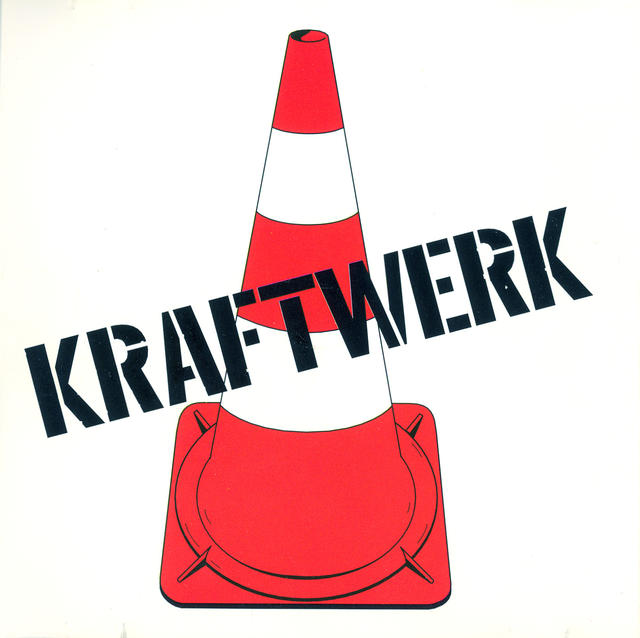
One of three albums in their “lost” period before Autobahn, this is more akin to Popol Vuh and Ash Ra Tempel than the ‘man-machine’ electronic pioneering sound they’re known for. Alternating dark drones and punchy pysch hairiness, it pairs well with my pitch black coffee and readies my day for the noise ahead.

I sort of liked this when it came out last year. I wasn’t excited for it, I wasn’t into high speed clipped vocals and juke rhythms, and I was probably just into something completely different at the time. When I brought it back out on a whim a couple months ago, Room(s) already felt fresher – then I made a copy for my car. Now it’s become a favorite driving accompaniment and sounds exponentially better with volume properly cranked. Hell, I included its moodiest track in the Shadow Piece mixtape. It’s fast and reveling in footwork colors and properly alien to first-time listeners, but there’s a depth and range of feeling here that doesn’t often crop up on dance albums. It’s this emotional tug that keeps it spinning and my interest pegged.
This guy just released Field Drawings and it’s been floating me for weeks. It was actually the first new album I heard after my mother passed and felt like it was piercing my dark world with a bit of much needed light. I’ll have more to say about this in another post. Just listen to the intro track above.

This is Tres, my cat’s cat. He was third in his litter, hence the name. Not everyone is a fan but to me, this is the most affectionate animal I’ve known. He’s a needy little bastard and seems nervous despite his unapologetic laziness. He is a bit out of shape but he’s spry. I think he’s allergic to pollen. He’s sitting on my lap as I type so I thought I’d share.
In 2011, like every year since I’ve discovered how to harness the power of the internet (and a handful of discerning friends) to expand my horizons and unveil whole dimensions of music, has been an incredible year for listening: another slab in my monument to Why You Should Pay Attention. I held crushes on a number of albums and fell deeply in love with a select few. All deserve acknowledgement but only the most striking motivate me to gush at length. With a little luck, I can turn people on to something which will enrich their lives and change perceptions in small or significant ways. Or maybe even sell an album for one of these deserving artists!
So I discovered that the entire groundbreaking, timeless, brilliant film is free on youtube.
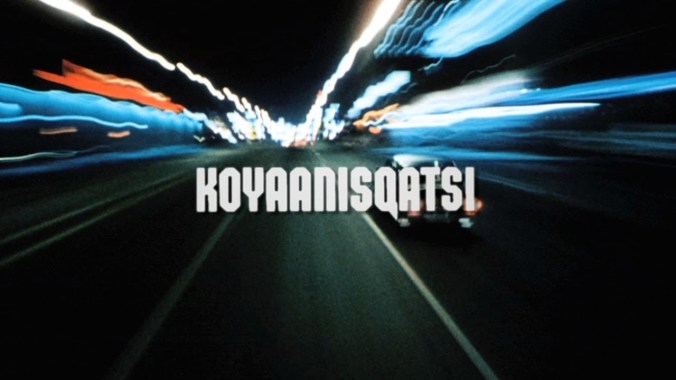
Instructions for those who have not seen Koyaanisqatsi:
1. Stop what you are doing immediately.
2. Turn volume up high.
3. Watch Koyaanisqatsi.
4. Bask in silent astonishment.
5. Thank me.
Honestly, this is one of those life-changing works of art which you will simply and honestly never forget. I fondly recall my first viewing, laying prone in front of a laptop in a cabin on a mountain at night and feeling my astonishment overtaking all physical sensation. This truly begs for the big screen, or at least a reasonably large one, with a reasonable sound system accompanying the visuals. Yet its artistry thrives in any time, place, or size. Which is exactly why I am sharing the profound discovery that it is free to anyone willing to pay only time and curiosity. Hell, if you have firefox with adblock plus, you won’t even see the ads (and honestly, get it – I couldn’t imagine this seamless dream interrupted by commercials) and the only thing you’re missing is the absolute clarity of the original high fidelity print. You’ll undoubtedly recognize certain elements within this time travelling all-encompassing slice of Life Itself, both stylistically and culturally. From the frenzied time-lapse shots of nature and city life contrasting with assembly lines and traffic patterns to the impossibly slow motion glimpses of astonishment and banality, the style and content of this film has influenced more than a generation of visual art and storytelling.
The best part is that I haven’t even gotten to the music; the reason this stands 30 years on as the timeless accomplishment it is: Philip Glass‘ score is the 10 ton monolith blocking out the sun, the elephant in the room, the absolute gravitational pull of this work. If you are at all familiar with 20th century minimalism via Charlemagne Palestine, Steve Reich, Terry Riley or their contemporaries, or especially Glass’ emotive, often romantic take on the sound, you are likely already familiar with some or all of these sounds; if not you are in for a warm embrace of what will likely become a hermetic world you’ll find easily inhabited and unequivocally addicting. Call it lazy, but having the film here and ready to watch makes me reluctant to begin ascribing descriptors to the music. It must be experienced to be grasped. The marriage of sound and picture is essential for direct, uninhibited understanding, for knowing the intrinsic appeal of minimalism itself, for laying bare the nature of conceptual ourboros, the cyclical existence we’re evolved to respond to. This score is meant to evoke the cosmic design of life itself from violent beginning to violent end and all of the impossibly close and personal yet gigantic moments in between.
Note: Do not listen before viewing. Although entirely gorgeous, worthy, and entrancing on its own… divorced from the imagery at birth, Glass’ score will never reach the same affection and thus should be saved for after-film experience.
John Cale & Terry Riley, two of the most important names in 20th century composition, formed an unlikely alliance for this one-off project in 1971. The result was one of the weirdest entries in either sonic titan’s personal oeuvre.

First of all: look at that cover art! After dozens of listens, I still don’t know the significance of this, yet have grown more fond each time I see it. The care and attention put into this is a small signifier of the music within; the big picture may seem obviously grand on first glance, yet astounding little details emerge during close inspection and bring the project into focus when one returns to the wider view.
Instead of performing a balancing act between Riley’s spacey minimalism and Cale’s avant-rock nature, each artist seems to pull the other in a direction previously unexplored. Of course, it’s not entirely surprising if you’re familiar with the output of both geniuses, but the sound is defiantly no exact split down the center of their respective sensibilities. From raging textural passages to alien placidity, through jazz whispers and on to a straight up vocal number, there’s more variety in these five tracks than a good portion of the rest of their careers.
The opening features Riley-an organ tones riffing over a krautrock groove of moaning guitars and intricately barbaric drumming, the whole jam subtly erupting and then sighing to a close. Second track The Hall of Mirrors in the Palace at Versailles hews closest to Riley’s minimalist nature with an appropriately meandering, lost-organ and woodwind shuffle while the short closer, The Protege, feels almost like a lost bluesy instrumental from The Velvet Underground‘s golden days (when Cale was in the group). Everything in between veers wildly between these extremes and even, in the epic centerpiece Ides of March, shoots for the moon in a song so neurotically busy with busted drums and ticklish piano that it manages to evoke one of my favorite turns of phrase: maximized minimalism.
The project seems to have been such an exception for each artist that, by all accounts, neither was satisfied with the end result. Luckily for those of us with an outside view, the work stands on its own as a unique hybrid, a historical artifact, and an eclectically bopping good listen.
You can unearth this brilliant jewel of a buried treasure at cduniverse or amazon.
 Optimistic Underground