Oneohtrix Point Never

‘It will astound you.’

The Korgis may not have been prophesizing the likes of Daniel Lopatin, aka Oneohtrix Point Never, but that doesn’t stop me from employing the lyric in prelude to this fantastic adventure.  So come on.  Open up.  Change your heart.

When a tonic this refreshing comes along under strange and rare circumstances, the first impulse is to bottle it up and zealously guard what we can, keeping the secret inside – lest the surprise and wonder be spoiled once the wider world is clued in.  The exuberant thrill of something so foreign and new, mainlining into that place where awestruck dreams and hazy childhood memories  intersect, is a thing to behold.  After burrowing deep into the material and subsisting on the sound alone, though, we emerge with the burning desire to shout about this revelation from the nearest hill top.  We want to place it in the hands of our friends and loved ones, imploring them to give it a try.  We get on the internet and write a blog post about it.

But first, we live in the belly of this beast for a while.  The world inside is warm, coated in a futuristic glaze and resting on a plate of brittle nostalgia.  The illusion of inhabiting my greatest preadolescent sci-fi fantasies threatens to crack at any moment, but the dream sustains over any running time.  The most inviting synthesizer tones on the planet mix with an untethered, noisy veneer to coat the entire sonic range from genteel new age to corrosive heavy drone, spiked with the best and brightest futuristic love letters the past has had to offer.  From Vangelis‘ darkly soaring Blade Runner score to the paranoid stabs of The Terminator, Terry Riley‘s groundbreaking dreamscape A Rainbow In Curved Air to the stark electronic shores of Manuel Göttsching (Ash Ra Tempel), this territory is clearly the province of an indelibly spacey imagination.

Zones Without People, my personal introduction to the artist, is the most obvious place to look now.  In a league populated by a select few contemporary dreamers and astral drifters like Emeralds and White Rainbow (see New Clouds and Best of 2009), Lopatin grasps the sonic galaxy whole cloth and spirits it away to his lab where every star, planet, and asteroid belt is shot through and wrung out with the latest in mind-bending laser technology.  Like the lush oxygen garden aboard the Icarus on its journey to reignite the sun, the entire work is suffused with the gritty footprint of organic life – bird calls, frogs, bubbling rivers, wind and all manner of insects echo from the depths – and organized into a most efficient delivery system for aural dopamine.  Channeling the aforementioned musical gods and hinting at further realms yet unexplored, the half hour recording transcends and transports far beyond its modest borders.  This is a monumental trip, in every sense of the word.
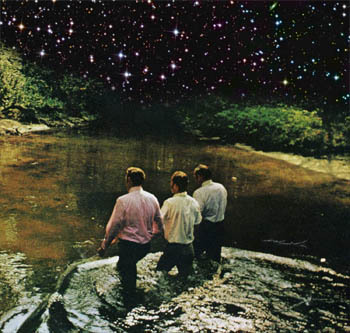
Next we have A Pact Between Strangers, a beguiling triptych of the most effervescent, liquid shapes Lopatin has worked with.  Sandwiched between two 12 minute throbbing drone epics, the title track strikes a soft nerve between the yawning pulse of Gas, the hard lines of straight Detroit techno, and the subtly sampledelic nature of Zones Without People‘s most tactile passages.  Beginning as a relaxed sequel to the opener, When I Get Back From New York floats from the most gently narcotic river bed upwards to find a maelstrom on the surface, a dervish of synth rapids and hissing meteor showers.  As the piece winds to a close and the solar winds exhale, total surrender has been achieved.  This is music to offer oneself up to completely.  Embrace it, climb inside.  Once acclimated, the journey outward is harsh.  The dials here are always pegged at elation, so it’s best not to make a move in that direction.

[with the originals impossibly hard to come by on their limited vinyl and CD-R releases, the majority of OPN’s output has been remastered and packaged into the 2cd Rifts compilation, available at boomkat, amazon, or directly through the man himself at pointnever.com]

Star Guitar

The Chemical Brothers exploded with Star Guitar in 2002, resulting in one of my favorite music videos of all time.  Ever.  Of all time.  It’s easily one of the most hypnotic, addictive, and straight up cool videos anyone will ever see.

And it’s got a delicious aura of “how the fuck did they do that?” – since the clip’s nearly a decade old.  The simplest explanation is to note the genius who conceived it:  Michel Gondry.

Yes, the man behind Eternal Sunshine of the Spotless Mind, one of the best films of this century so far, and The Science of Sleep (La science des rêves to the hip and the French), a personal favorite of mine for reasons yet to remain mysterious.

I know the clip isn’t viewable here, but that’s a good thing.  Click, go to the youtube page, and watch it in HQ to get the full experience.  You’ll emerge a changed person.  Or at least smiling.

[this song is available on the album Come With Us, as well as the excellent 2cd Brotherhood compilation]

Steve Reich’s Early Works

Early Works is a collection of various mould-breaking recordings Steve Reich produced before truly igniting his star with the trademark instrumental minimalism he continues to perfect today.  They are as essential to current minimalism as blues itself was to the invention of rock ‘n’ roll.

earlyworks

Groundbreaking in every sense of the word.  Half of the record consists of musique concrete-style tape loop experiments: Come Out and It’s Gonna Rain – respectively based on vocal samples about police brutality and apocalyptic evangalicalism.  On Come Out, words are presented at first unvarnished, sounding straight from a tape recorder.  “I had to, like open the bruise up, and let some of the bruise blood come out to show them-” states a youthful voice, halting and immediate.  A few repetitions in it begins to split, speeding up in one channel and slowing to an uneasy cadence in the other.  Eventually the dissonance created between the two is combined into a single raucious, nearly beat-driven refrain of “come out / to show them” as two sides of an aural samurai sword swinging to obliterate the mind’s preconceptions of the human voice.  Deconstructing so fully through looping, splicing, and speed, the listener forced to confront the individual phenotypes of speech itself, the malleable nature of words and voice.  A backing beat appear to solidify, but it’s only a byproduct of this snippet of dialogue sifting its way toward a nearly sublime (though always unnerving) rhythm.  The second, It’s Gonna Rain, starts off with prophetic booming preacher assertions, including the titular phrase, which devolves through the same techniques into a cacophany of beats and noise, before developing in the song’s second half into an absolute maelstrom of unrecognizable shouting in tongues.  Except the tongue-speak is fed through a kaleidoscopic blender where only the faintest remnants of whole syllables are detectable.  It’s a disorienting, slightly terrifying, ultimately satisfying journey into the unknown.

The other half of the record hews much closer to the later phase driven work Reich is most known for.  Piano Phase, written just one year after the tape works, showed his genius for the sublime instrumental passages in full bloom and ready for the major leagues.  It’s a piece still played by ensembles when performing selections from his vast body of work, and for good reason.  The same ecstasy-wracked trance effects evident in this 20 minute blissout echo today throughout everything subsequently written by the man.  Simply put, there would be no Music for 18 Musicians, Drumming, Octet, Different Trains/Electric Counterpoint or City Life without this definitive, seed planting piece.  The juggernaut is followed by a short song aptly titled Clapping Music.  If you’ve followed along at all by this point, what’s in store should be obvious.  It’s fantastic.

[for years these recordings were a rarity spread across dozens of disparate and out-of-print vinyl releases, but can be handily obtained via boomkat, cduniverse, or the dependable portal of amazon]

Disco Inferno – The Five EPs

Here for all to witness is the wonderfully fleshed out evolution of one of the premier bands of modern times, Disco Inferno.  I’ve already shared their greatest album – DI Go Pop – so now it’s time to realize the full trajectory of this majestic yet mind-bogglingly ignored outfit from post-punk innovators to something altogether more advanced, alien, and never since equalled.

040618-disco_inferno

Between 1992 and 1994 this band singlehandedly expanded the concept of what rock music could be, influencing countless other forward-thinking artists while remaining shrouded from the public, and as it turns out, history’s gaze.  The five EPs collected here represent some of the most staggering artistic growth a single group has ever achieved in a lifetime – and Disco Inferno accomplished this feat in only two years.

DISCO INFERNO - SUMMER'S LAST SOUND EP F

Summer’s Last Sound

82427

A Rock To Cling To

DISCO INFERNO - THE LAST DANCE EP F

The Last Dance

DISCO INFERNO - SECOND LANGUAGE EP F

Second Language

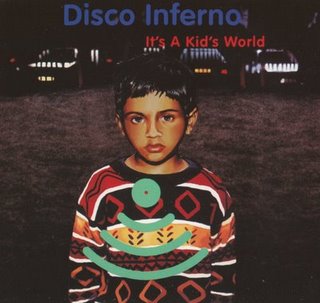
DISCO INFERNO - IT'S A KID'S WORLD EP F

It’s A Kid’s World

[normally this is where you’re pointed towards a purchase point.  unfortunately none of these EPs have been reissued since their first release and are currently unavailable commercially.  if you find used copies please bring it to my attention and that will be shared here.  for now just enjoy the music.]

Can – Future Days

Can - Future Days

Can rock the world.  Really fucking hard.  If you don’t know this in your body and soul, then take the time to either A) reassess your lifestyle, or B) start listening to their albums and make life a little better for your self and loved ones alike.

Continue reading

Disco Inferno – D.I. Go Pop

This is not your mother’s disco. It’s one of the most innovative yet short lived bands in the last 20 years!

digopop

Disco Inferno are pretty much the definition of “post rock” – though certainly not in the mould of nearly any band currently saddled with the oft-abused label.  DI made records truly beyond the rock idiom in nearly every way, and paid the price of an untimely death with slim recognition and anemic sales.  Of course now, in the internet age, they’ve been somewhat resurrected… for another generation to ignore.  I’m trying to rectify such a musical travesty.

D.I. Go Pop was the band’s second LP, issued after a string of increasingly brilliant singles and EPs which took them from the humble roots of post-punk also-rans to the heights of rock experimentatation.  Although the title begs otherwise, this is probably the most ‘challenging’ DI release.  However, it’s not a reaction against pop forms.  These 8 songs feel like someone broke the model for modern rock and, after forgetting how it originally went together,  decided to assemble the pieces into something new and different.  They don’t simply de- or reconstruct it, but fashion something more ambiguous, personal and interesting.  I won’t try to describe the sounds other than, generally speaking, they were far ahead of their time in the use of sampling, presaging everything from Matmos to The Books to Animal Collective‘s later albums.

[grab this truly worthy yet well-hidden gem at amazon]

Cornelius – Fantasma!

Cornelius is the music pseudonym of pop wunderkind Keigo Oyamada, a true maverick and leading light of his nation’s music community.  He was first, unfortunately, tagged as the “Japanese Beck” – unfortunate because he’s so much more than this reductive catchphrase could encapsulate.  He initially traded in pop-sound mashups and collage song structure, as Mr. Hanson did, but most similarities end there.

fantasma

One reason the Beck comparison fails is simply that Cornelius was working within a music scene he helped create – shibuya-kei.  Starting with his group Flipper’s Guitar, and popularized by Pizzicato Five, the sound thrived in Japan throughout the 90’s and is still the basis for many new projects – everything from Buffalo Daughter‘s trance-rock disco confections to the utterly sublime Katamari Damacy game soundtrack.  [Which reminds me, I’ll be writing about that strange treasure of an album soon.]

Since you’re here about the album, I’ll get to it.  Fantasma is considered by most fans to be the crown jewel of Cornelius‘ recorded output.  As a lover of Point, I’m personally on the fence, but there is no question that this is the place to start if you’re curious about the man and his amazing work.  Imagine a musical genius being exposed to all manner of 20th century music – from the bleeding-edge avant garde composers to the purveyors of sixties pop majesty – all at once, with no distinctions drawn between ‘art’ and ‘fun.’   Then imagine him fusing everything he hears into a cohesive shape, focused through a lense of 80’s hiphop irreverence and carved with a DJ’s ear for pacing and transition.  Then imagine he makes a record with the ambitions of Pet Sounds-era Brian Wilson.  You’re close.

Now, play this album and realize that Keigo Oyamada shares not only the ambitions, but talents of my favorite Wilson brother.  This is no mere cheap analogy:  Repeated close listens to the nuanced and fractured pop ecstasy he’s made reveal the truth in my words.  He may never be as lauded, much less well-known, as those Beach Boys he worshipped as a youth.  But he deserves it, and this album is Exhibit A in making the case.

[grab this at amazon or for only $8 from matador themselves.]